
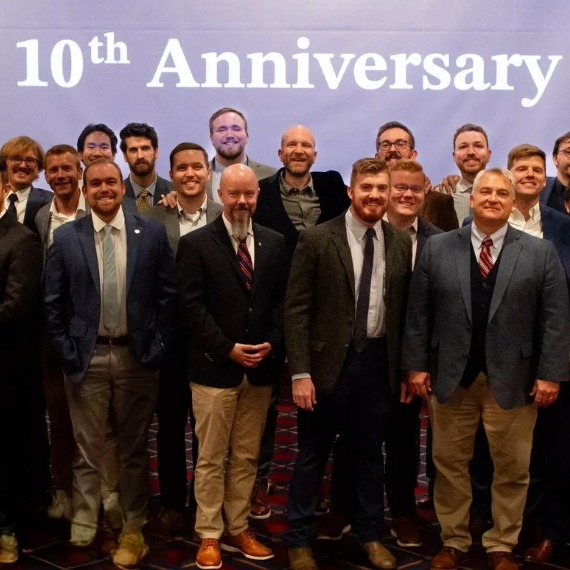
Hear firsthand accounts from Mathena Center alumni—faithful pastors now serving in diverse ministry contexts—who reflect on how their training in our internship equipped them for the joys and challenges of pastoral ministry. They share their insights on:
These testimonies highlight our commitment to equipping men for long-term faithfulness in pastoral ministry in order to revitalize churches in the SBC.
Mike Craig, who admits to being naturally impatient and driven by personal timelines, credits Brian Croft and the Mathena Center with teaching him that the gospel is powerful but works slowly. This conviction fosters sustainable pastoral endurance.
Randall Cofield ranks “enduring in a pastorate” highest, lamenting the SBC’s average tenure of less than three years as insufficient for meaningful, lasting church work. He advocates for a “holy stick-to-it-iveness” as essential for church revitalization.
Bryan Watts emphasizes shifting focus from church metrics (e.g., budgets, attendance, and operational goals) to the core role of a pastor as a shepherd—preaching the Word, caring for the flock, and supporting people through highs and lows.
Bryan Watts emphasizes shifting focus from church metrics (e.g., budgets, attendance, and operational goals) to the core role of a pastor as a shepherd—preaching the Word, caring for the flock, and supporting people through highs and lows.
Jon Page stresses that pastors should primarily devote themselves to preaching the Word and prayer, drawing from Acts 20:28. He highlights a practical application learned in the internship: regularly praying through the church membership directory.
Drawing from over two years of pastoring, Jonathan Ginn highlights the internship’s emphasis on “pastoral patience”—recognizing that church change, spiritual maturity, and growth occur gradually on God’s timeline, not ours.
Keith Trollinger shares that he came from a ministry context lacking strong pastoral shepherding. The internship has profoundly reshaped his understanding of what makes a local church healthy, making it the most influential aspect of his seminary training.
Matt Cable emphasizes the internship’s framework for soul-care, providing a framework to maintain a deep connection with Christ amid ministry demands. He credits the program’s principles on “rhythms of rest” as a “guiding light” for ministry stabilization.
Drawing from 1 Corinthians 16, Michael Carlino highlights Paul’s mindset that an “open door for effective ministry” often comes with opposition, and is a true opportunity for God to accomplish great things through difficulty for the church’s good.
Philip Craig stresses a key lesson: pastors must not love “church revitalization” more than the church itself. He credits the internship for helping him see pastors are accountable for souls before God, not growth metrics.
Sean Corser warns pastors to avoid seeking personal prominence and stresses that recognizing Christ’s lordship over His blood-bought church fosters humility, freedom from performance pressure, and rest in God’s saving work—enabling authentic shepherding.
Shaun Martins credits the core structure of the program—pastoral theology, healthy ecclesiology, & personal soul care—with guiding his early pastoral tasks, such as implementing church membership processes that unified/aligned the congregation over time.